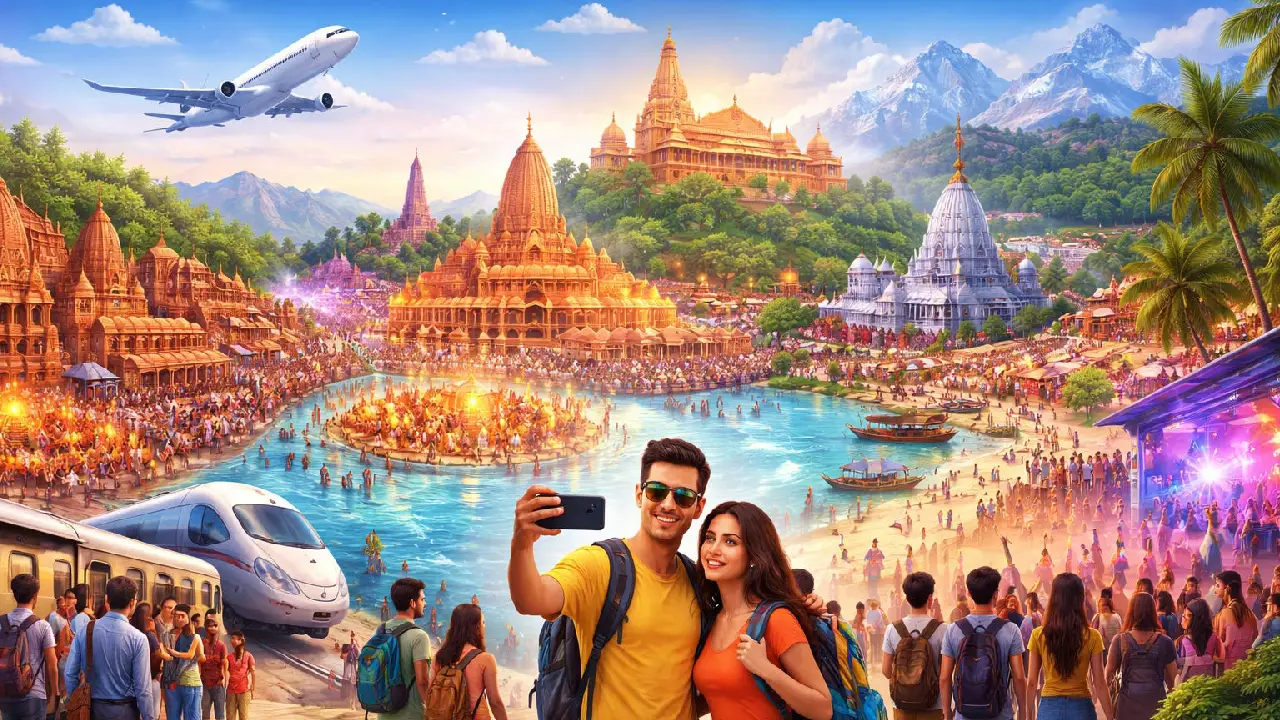
During my travels across India, I’ve often met foreign tourists who knew surprisingly little about the country before arriving here. Some came expecting only crowded cities and spicy food. Others thought India was mainly about the Taj Mahal or yoga retreats. But after spending a few weeks exploring the country, many of them completely changed their perception. I still remember speaking with a traveler from Spain in Gujarat who told me, “Nobody explained to us that India has deserts, mangroves, wildlife, beaches, ancient stepwells, Himalayan villages, and modern cities all at once.”
That conversation returned to my mind recently after reading a strong statement from India’s travel industry leaders. According to a report discussed during a tourism event in Tamil Nadu, India’s travel and tourism sector could reportedly earn nearly 25% more foreign exchange revenue if the country is promoted more aggressively overseas. The industry believes India still remains under-marketed globally despite possessing one of the world’s most diverse tourism landscapes.
As a travel blogger who constantly explores Indian destinations, I honestly think this observation is absolutely correct. India has enormous tourism potential, but the country still struggles to communicate its full travel story effectively to international audiences.
Table of Contents
India Already Earns Massive Revenue From Tourism
Tourism is not just about vacations anymore. It is now one of India’s largest service industries, supporting hotels, transport operators, guides, restaurants, airlines, handicraft sellers, photographers, local drivers, and small business owners.
According to government tourism data, India receives millions of international tourist arrivals annually, generating billions of dollars in foreign exchange earnings. Before the pandemic, foreign exchange earnings from tourism crossed ₹2 lakh crore annually.
That figure alone shows how important tourism has become for the economy. But industry experts now believe India could significantly increase those earnings if overseas marketing becomes stronger and more targeted.
Many Foreign Travelers Still Have a Narrow Image of India
One thing I’ve repeatedly noticed while meeting international tourists is how limited India’s global tourism image still remains.
Most first-time visitors primarily associate India with:
- The Taj Mahal
- Delhi
- Goa
- Yoga
- Bollywood
- Spiritual tourism
While these are important parts of Indian tourism, they represent only a tiny fraction of what the country actually offers.
India also has:
- High-altitude deserts
- Rainforests
- Wildlife reserves
- Island tourism
- Ancient cave systems
- Tribal cultures
- Culinary tourism
- Luxury train journeys
- Adventure circuits
The diversity is extraordinary.
Yet many international campaigns still fail to showcase this broader picture effectively.
The Tourism Industry Wants Stronger Overseas Promotion
According to the Deccan Chronicle report, tourism industry representatives emphasized that India requires more consistent international promotion campaigns to attract higher foreign tourist spending. Personally, I think this is one of India’s biggest untapped opportunities. Countries like Thailand, Dubai, Singapore, and Malaysia invest heavily in destination branding across international markets.
Their tourism advertisements appear everywhere:
- Airports
- International sports events
- Digital platforms
- Global travel expos
- Airline partnerships
India, despite being far larger and more diverse, often appears comparatively less visible in international tourism advertising.
Tourism Promotion Is No Longer Just About Posters
Modern tourism marketing has changed dramatically.
Travel decisions today are influenced by:
- Instagram reels
- YouTube travel films
- Travel influencers
- Search trends
- Airline collaborations
- Digital storytelling
As someone working in travel content, I genuinely think India still underutilizes digital destination storytelling globally. Several Indian states have improved significantly in recent years, but international-level branding consistency still feels fragmented.
Tamil Nadu’s Tourism Push Shows What’s Possible
The tourism event referenced in the report took place in Tamil Nadu, one of India’s strongest cultural tourism states. Honestly, Tamil Nadu represents exactly the kind of destination India should market more aggressively overseas.
The state offers:
- UNESCO heritage temples
- Classical dance traditions
- Hill stations
- Spiritual circuits
- Beaches
- Wildlife tourism
- Chettinad cuisine
Yet many foreign travelers still know very little about it compared to destinations in Southeast Asia. That gap between tourism potential and international awareness exists across several Indian states.
Foreign Tourists Usually Spend More Than Domestic Travelers
One major reason the industry focuses on international tourism is foreign exchange earnings.
International travelers generally spend more on:
- Hotels
- Transport
- Experiences
- Shopping
- Guided tours
- Luxury travel
Even a moderate increase in international tourist arrivals can significantly boost local economies. And unlike many industries, tourism revenue spreads across multiple sectors simultaneously. A foreign tourist visiting Rajasthan, Kerala, or Gujarat supports not just hotels, but also taxi drivers, artisans, performers, café owners, and local markets.
India Has Strong Advantages Most Countries Cannot Replicate
From my personal experience, India possesses tourism advantages that many destinations simply cannot copy.
Very few countries offer:
- Snow mountains
- Tropical beaches
- Ancient civilizations
- Desert landscapes
- Wildlife safaris
- Spiritual diversity
- Mega festivals
all within one nation.
India also benefits from:
- English-speaking tourism services
- Competitive pricing
- Large domestic aviation networks
- Expanding highways
- Strong railway connectivity
The infrastructure challenges still exist, but the foundation for large-scale tourism growth is already present.
Global Interest in Experiential Travel Is Rising
Another reason I think India has enormous future tourism potential is changing traveler behavior.
Modern travelers increasingly seek:
- Cultural immersion
- Local food experiences
- Rural tourism
- Spiritual retreats
- Heritage stays
- Nature-based travel
India naturally excels in these areas. Many international tourists today want authentic experiences rather than just luxury shopping destinations. And authenticity is one thing India has in abundance.
Connectivity Improvements Are Quietly Helping Tourism
One factor often ignored in tourism discussions is infrastructure improvement.
Over the last decade, India has significantly expanded:
- Expressways
- Regional airports
- Vande Bharat train routes
- Rural road access
- Metro systems
As someone who frequently travels domestically, I’ve personally seen destinations becoming more accessible year after year. Better connectivity directly improves tourism competitiveness. Foreign travelers value convenience as much as attractions themselves.
Safety and Cleanliness Still Matter Deeply
While India’s tourism strengths are enormous, there are also areas where improvements remain necessary.
International travelers frequently discuss concerns around:
- Cleanliness
- Public hygiene
- Traffic management
- Tourist scams
- Women’s safety
Honestly, these issues influence tourism reputation more than governments sometimes realize. Global travelers compare destinations constantly. Positive travel experiences create repeat tourism and strong word-of-mouth promotion. Negative experiences spread equally fast online.
India’s Medical and Spiritual Tourism Segments Are Growing Fast
Interestingly, India’s tourism growth is no longer limited to sightseeing.
The country is increasingly attracting visitors for:
- Ayurveda treatments
- Yoga retreats
- Medical tourism
- Wellness travel
- Meditation programs
These sectors generate high-value tourism because travelers often stay longer and spend more. India’s affordability compared to Western healthcare and wellness markets also gives it a major competitive advantage.
The Role of Indian Diaspora Travelers Is Huge
Another important factor is the global Indian diaspora.
Millions of overseas Indians regularly visit the country for:
- Family visits
- Religious tourism
- Weddings
- Cultural events
Many also bring foreign friends or relatives along. This creates an organic tourism promotion network that India could leverage much more effectively internationally.
Tourism Can Create Employment Faster Than Many Industries
One reason tourism deserves more attention economically is job creation.
Tourism supports employment across:
- Hospitality
- Transport
- Photography
- Event management
- Local crafts
- Adventure tourism
- Rural enterprises
Unlike highly automated industries, tourism still depends heavily on human interaction. That makes it especially valuable for local economies.
International Perception Still Shapes Tourism Growth
One thing I’ve learned through travel blogging is that perception often matters as much as reality. Some destinations become globally popular not only because they are beautiful, but because they are marketed consistently and professionally. India still has several world-class destinations that remain under-promoted internationally. Many foreign travelers discover India only after hearing personal recommendations rather than seeing major global campaigns. That shows both the strength and weakness of India’s tourism positioning.
My Personal View on India’s Tourism Future
After reading the industry’s estimate about possible 25% higher foreign exchange earnings, I honestly think the figure sounds realistic. India’s tourism potential still feels significantly underutilized internationally.
The country already possesses:
- Diverse geography
- Rich culture
- Competitive pricing
- Large-scale infrastructure growth
- Strong domestic travel demand
What’s missing is a more unified, globally visible tourism narrative. India needs stronger storytelling abroad – not just about monuments, but about experiences.
Conclusion: India’s Tourism Story Is Still Being Written
As someone who travels across India regularly, I genuinely believe the country remains one of the world’s most underrated tourism giants. Few destinations can offer the scale, diversity, emotion, spirituality, cuisine, and cultural depth that India provides. And yet, global awareness still feels surprisingly limited beyond a handful of iconic attractions.
The tourism industry’s claim that India could earn 25% more foreign exchange through stronger overseas promotion highlights an important reality: India’s tourism journey is still only partially unlocked. If international marketing improves alongside infrastructure, safety, and traveler experience, India may eventually become not just a major tourism destination – but one of the world’s defining travel economies.